The natal chart, or Kundli, is a map of your life’s potentials written in the sky at the moment of your first breath. In Vedic astrology we read this map by dividing the sky into twelve houses—each house governs a distinct slice of experience, from health to wealth to relationships—so you can see where planets are naturally inclined to give or withhold their energies.
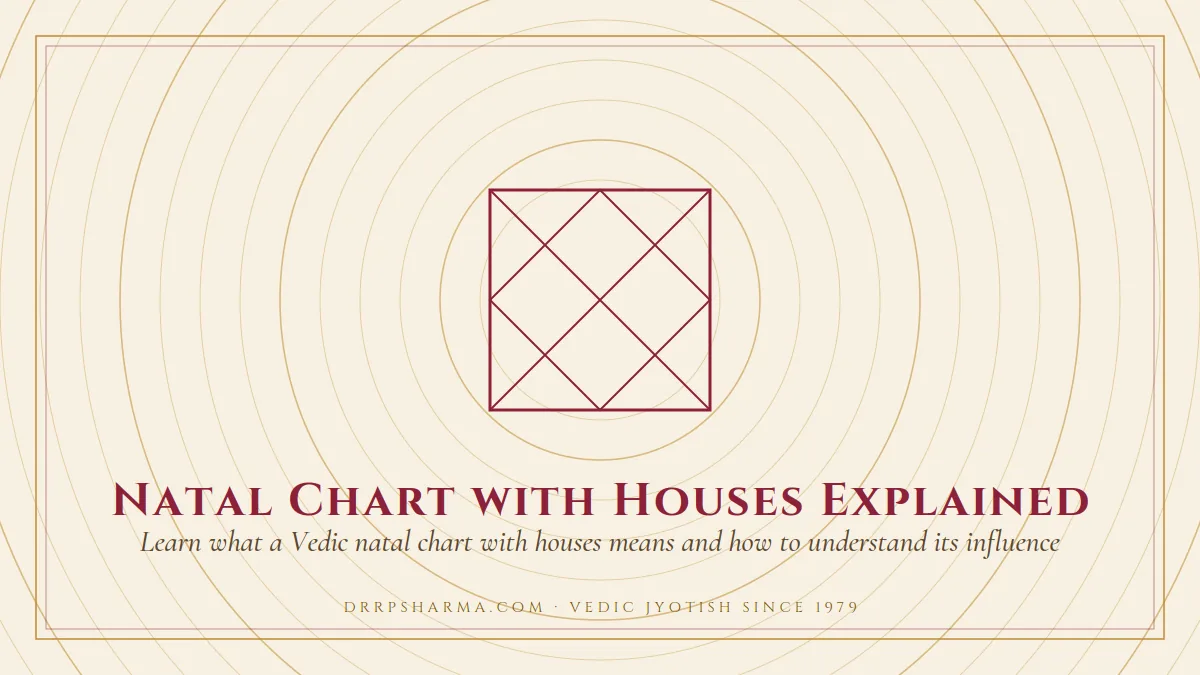
What is a natal chart with houses in Vedic astrology and why is it important?
A natal chart, or Kundli, is a circular map of the sky at your birth, split into twelve sectors called houses (bhavas). Each house governs a specific area of life—health, wealth, siblings, parents, education, career, marriage, children, obstacles, inheritance, gains, and final liberation. Planets positioned inside these houses colour that area with their traits; signs on the house cusps colour how those traits express. Without the houses, planets are mere actors without a stage, so the houses give every event its setting and timing.
The first house (Lagna) sets the overall life tone, while the seventh house marks partnerships. Planets in the tenth house show your work identity, and planets in the fourth house reflect home and mother. The strength of a house depends on its sign, its lord, and any aspect or conjunction it receives from other planets.
How do Vedic astrologers assign houses to signs at birth?
At the exact moment of your birth, the astrologer chooses the rising sign (Lagna) in the east. The twelve houses are then counted anti-clockwise from that rising point. The sign that appears on the eastern horizon becomes the first house, the next sign the second, and so on. This method—called the Bhava-Chalit system—respects the actual tilt of the earth and gives each house its own sign, even if it differs from the adjacent house. Some traditional systems keep all twelve houses in one sign, but the Chalit method is more precise for timing events.
For example, if Cancer rises at birth, the first house is Cancer, the second house will be Leo, the third Virgo, and so forth. Planets placed within 15° of the cusp are considered to reside in that house.
Which houses matter most for health, wealth and relationships?
For health and vitality, focus on the first house (your body), the sixth house (illness, debts), the eighth house (chronic issues), and the twelfth house (hospitals, losses). Wealth is primarily shaped by the second house (earned money), the fifth house (speculative gains), the ninth house (gifts, father’s legacy), and the tenth house (profession, income). Relationships centre on the seventh house (marriage and partnerships), the fifth house (love, children), and the eighth house (long-term intimacy, joint resources).
When assessing a house, always check the planet that owns it (its lord) and whether it is placed in a friendly or inimical sign. A well-placed lord strengthens the house, while affliction asks for remedies like mantra, gem or charity.
How do planets placed in a house change its meaning?
A planet acts like an actor cast into a play’s scene: it brings its nature into the house it occupies. Mars in the fourth house sharpens home life but can bring arguments; Jupiter there softens domestic matters and brings wisdom; Saturn there demands discipline and may delay property matters. The planet’s dignity—exalted, own sign, friendly, neutral or debilitated—determines whether it gives support or stress in that area.
An exalted planet in a house gives positive results during its planetary periods (dashas), while a debilitated planet may yield results only after maturity or remedial measures. Aspects from other planets further modify the outcome.
What is a house’s ‘lord’ and why do we care about it?
Each house is owned by a planet—the same planets that rule the signs on the house cusps. The lord is the chief decision-maker for that house’s affairs. If Jupiter owns the seventh house (marriage), Jupiter’s placement, strength and dasha period will strongly influence when and how marriage unfolds. A strong lord can mitigate negative placements in the house, while a weak lord may struggle to deliver even under good transits.
To judge a lord, look at its sign placement, any aspects it receives, its natural benefic or malefic nature, and whether it is combust or retrograde. In Indian festivals, we often see such lordly influences at play during events like marriages (seventh lord) or promotions (tenth lord).
What should you actually do once you understand your houses?
Use the chart as a map, not a verdict. Note which houses are strong and which are challenged; then time your efforts to the planetary periods (dashas) of the houses’ lords. If the second house of wealth is weak, avoid risky investments in its dasha; instead save and learn. If the tenth house is under stress, upgrade skills in its dasha rather than changing jobs abruptly. Remedies like mantra, gem or charity are supportive tools, not magic fixes.
For chart-specific questions—such as why delays occurred in a particular house, or how to strengthen a weak house—the detail of a live consultation helps. In practice, I see clients find clarity by aligning daily actions with the natural rhythms indicated by their houses and dashas.
Frequently Asked Questions
Can two people born at the same time share the same house meanings?
Two people born within a few minutes of each other will have nearly identical house cusps, but minute differences in birth time shift the signs on the cusps and change which planets fall into which houses. Even identical twins differ slightly in house placements, so house meanings always need individual interpretation.
How do retrogrades affect house placements?
Retrograde planets still occupy the house they are physically in, but their energies turn inward, often delaying external expression. For example, retrograde Jupiter in the fifth house may postpone children until its dasha matures, even though it remains in the same house.
Is the eleventh house only about gains and friends?
The eleventh house governs gains, elder siblings, social networks and hopes for the future, but it also reflects older siblings’ role in your life and your networking skills. Planets here can indicate how easily you make friends or receive unexpected money.
What’s the difference between a house’s sign and its lord’s sign?
The house’s sign is the sign that appears on its cusp at birth; the lord’s sign is the sign where the lord planet itself is placed. For instance, if the second house cusp is in Leo, its lord Sun may actually be in Pisces, giving two layers of meaning—earned money through Leo’s fire energy, but Sun’s Pisces expression may soften how you handle finances.
Part of our guide: Kundli & Birth Chart →
For guidance specific to your own birth chart, a personal consultation considers the complete picture.
Book a Consultation · ₹5,100 WhatsApp Dr. SharmaThis article is offered as general guidance in the Vedic tradition. Astrology is a tool for reflection and is not a substitute for professional medical, legal or financial advice.
Start free: your free kundli and 90-page PDF — no signup, no login, no ads. If you then want a personal reading, book a consultation (flat ₹5,100, by phone, WhatsApp or video).
Related guidance: Love & Relationship Astrology Consultation.
See also: 2027 Grahan List In India.
Related guidance: Money & Finance Astrology.