Vedic Astrology Basics: Foundation of Jyotish Shastra

Vedic astrology (Jyotish Shastra) is one of the six Vedangas, with over 5,000 years of continuous tradition. It uses the sidereal zodiac and emphasizes predictive techniques like Vimshottari Dasha.
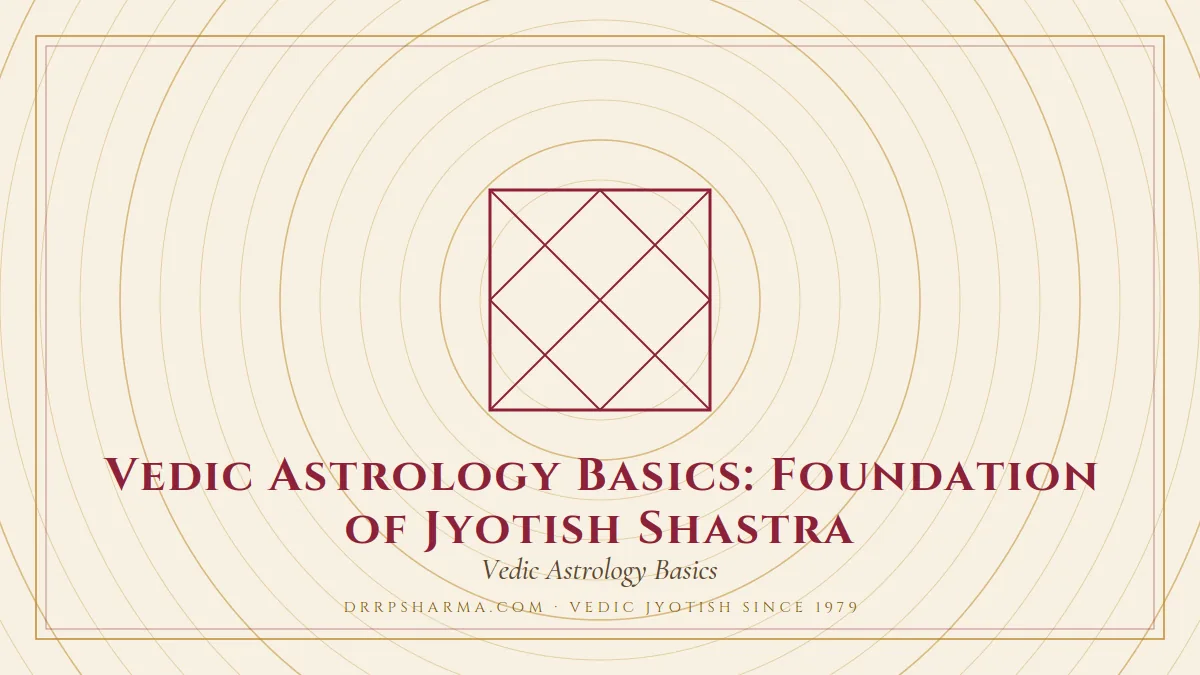
Core Components

Key Differences from Western Astrology

AspectVedicWestern
ZodiacSiderealTropical
FocusPredictive, karmicPsychological
TimingVimshottari DashaTransits, progressions

Need Personalized Guidance?

Get detailed analysis based on your birth chart from Dr. R.P. Sharma.

Book Consultation

People Also Ask

How does vedic astrology basics help?

Vedic Astrology Basics works through the houses, lords and dasha periods of your chart. Dr. Sharma reads these together — no single factor acts alone — and explains the result in plain language.

About fees

The kundli, PDF report and matching are free; a full personal consultation with Dr. Sharma is a flat Rs 5,100.

About best astrologer for vedic astrology basics

Judge any astrologer by method, experience and honesty rather than titles. Dr. Sharma has practised since 1979 — 47 years of chart-based, plain-language guidance.

Can I get a personal reading about vedic astrology basics?

Yes — the page above gives the classical picture; a consultation applies it to your exact chart. Your kundli and detailed PDF are free; a full sitting with Dr. Sharma is a flat Rs 5,100.

How does vedic astrology basics interact with my dasha?

The running dasha decides WHEN vedic astrology basics's significations activate in your life. The same placement behaves differently in different periods — timing is half the reading.

Who This Guidance Is For

In the area around Vedic Astrology Basics, many families trace their roots to the old trading lanes yet now send their children into auto-parts factories, logistics firms and IT parks nearby. When Saturn in the tenth house delays promotions or Mercury turns retrograde in Virgo, parents worry about engineering placements; a strong Sun or a well-placed Mars in the second or fifth house often shows steady career progress. Families also watch Rahu-Ketu in the fourth and eighth houses when buying or selling land—classical texts warn that afflicted lunar nodes can bring boundary disputes or hidden loans on property. For marriage timing, Jupiter’s aspect on the seventh house and Venus’s dignity in Libra or Taurus are reliable indicators; if Saturn aspects both Venus and the seventh lord, parents traditionally perform a simple graha shanti at the local temple to soften delays. The nakshatras around Vedic Astrology Basics, especially Hasta and Chitra, give skillful hands—supporting both workshop work and digital design careers.

Frequently Asked Questions

What exactly is Vedic astrology and how does it differ from general astrology?

Vedic astrology, or Jyotish, is the ancient Indian system of mapping time and space through the positions of the Sun, Moon, and planets at birth, interpreted through the twelve bhavas (houses) and twenty-seven nakshatras (lunar mansions). Unlike Western astrology, it uses the sidereal zodiac, fixes the first bhava at the ascendant, and emphasizes dashas (planetary periods) and yogas (planetary combinations) to time events precisely.

How accurate are astrological predictions, really?

Accuracy depends on the quality of the birth details and the astrologer’s skill—not on the stars themselves. When the lagna (ascendant) and Moon sign are correctly recorded, and the dashas are carefully read, predictions can be surprisingly reliable for timing career shifts, marriage, health episodes, and major decisions.

Can astrology change destiny, or does it only guide?

Astrology neither alters karma nor overrides free will. It reveals the karmic blueprint so you can act wisely within your dashas. Strengthening benefic planets through mantra, gemstone (after a qualified weighing), or appropriate charity can soften harsh yogas, but the final choice remains yours.

Is Vedic astrology more reliable than Western astrology?

Reliability hinges on the system’s fit to the native’s chart. Vedic astrology’s use of the sidereal zodiac, nakshatras, and dasha periods gives it a practical edge for timing events in Indian contexts. Western astrology’s psychological approach complements this but is less precise for material outcomes in my experience gathered since 1979.

What if an astrologer’s prediction turns out wrong?

Predictions are probabilities, not certainties. A misread lagna, incorrect dashas, or the native’s conscious/unconscious choices can shift outcomes. Re-examining the chart with corrected birth time often clarifies the picture; classical texts such as Brihat Parashara Hora Shastra advise re-checking the bhava positions before attributing “error” to the science.

Between an online astrologer and a local astrologer, which is better for a detailed life reading?

For a thorough analysis you need the exact lagna and Moon nakshatra, best obtained from the birth certificate or hospital records. A local astrologer can verify details in person and read subtle planetary strengths through ashtakavarga or varga charts. Online sessions work well for quick checks once the birth data is confirmed.

How is a free automated horoscope different from a paid human reading?

Free automated horoscopes use a generic template and only the Sun sign, missing the lagna, Moon sign, dashas, and yogas that determine real-life timing. A human reading integrates the entire chart, checks for maraka planets in the 2nd and 7th houses, reads the dasa-antardasa, and suggests practical remedies tailored to your nakshatra and planetary strengths.

Start free: your free 90-page kundli PDF. No signup, no login, no ads.